Enterprising Up the Ladder: Family Origins and Wealth Mobility
2026
Presentations: NFN PhD Workshop (2026), WEFI Fellows Conference (2026), BI Finance Department Research Days (2026)
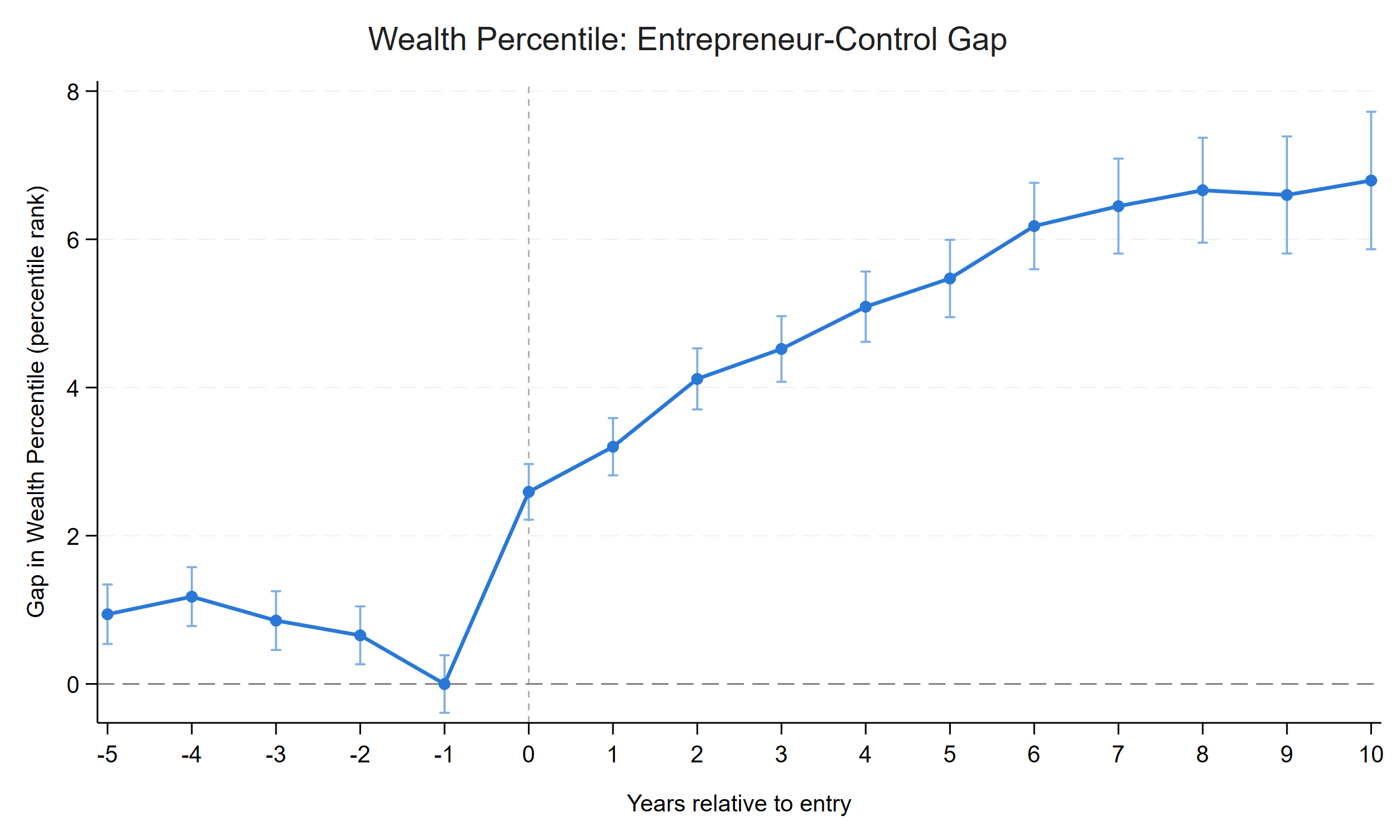
Entrepreneurship is often portrayed as a way for individuals to rise beyond their economic circumstances. But does it deliver upward wealth mobility, and if so, for whom? Five years after entry, Norwegian founders stand 5.2 percentile points further above their parents than matched non-founders, and are 13.0 percentage points more likely to reach the top wealth decile. Future founders from poor families already stand further above their parents than their matched peers before entry, but post-entry gains are similar across family origins. People with more wealth of their own are much more likely to start a business, while their parents’ wealth matters far less. Wealth mainly affects who gets to become a founder, not how much they gain afterward.